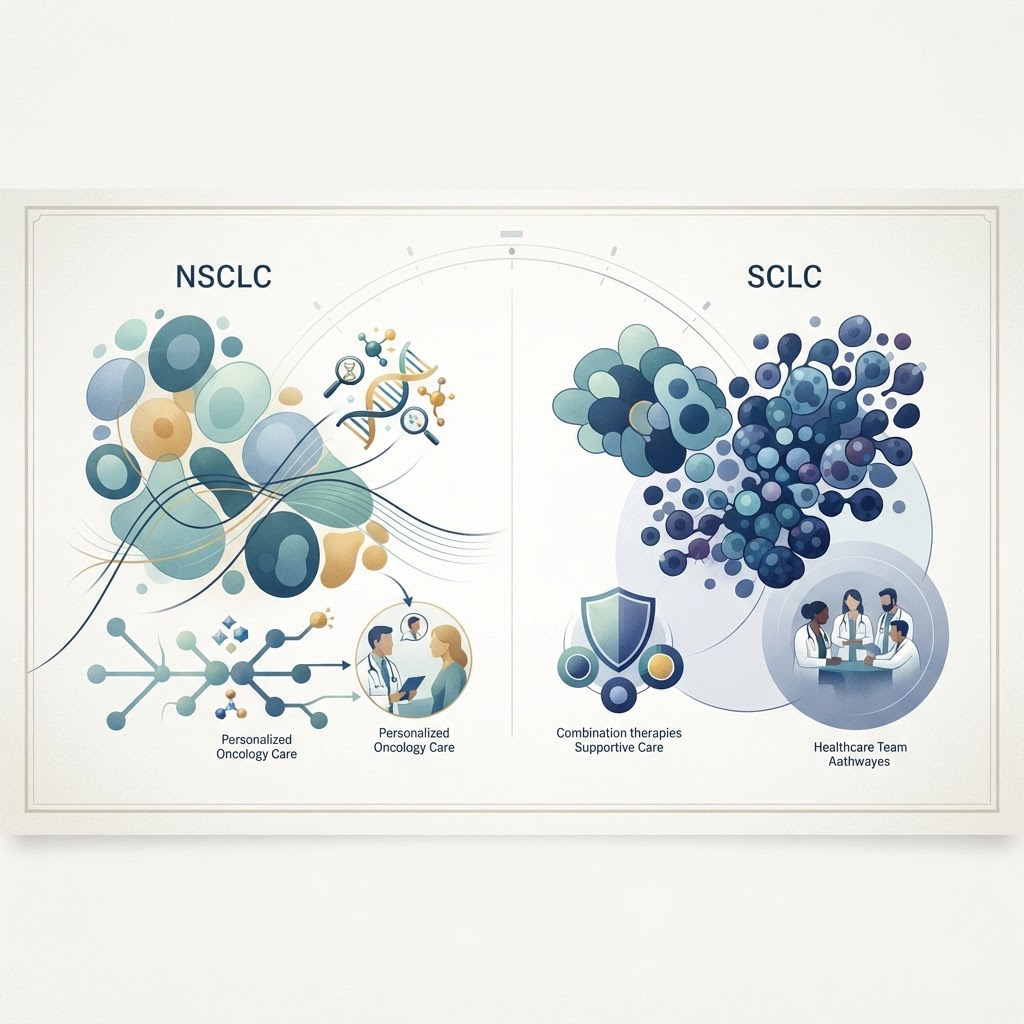
Receiving a lung cancer diagnosis involves processing complex medical information, including prognosis and survival statistics. These data reflect large population groups and serve as general benchmarks rather than precise predictions for any single person. Understanding the biological nature of lung cancer and the role of modern diagnostic tools is necessary for meaningful discussions with a clinical team. This guide clarifies how to interpret statistical data, the importance of individualized care, and how to approach prognostic conversations with your healthcare providers.
Understanding Prognosis and Survival Statistics
Prognosis is an estimate of how a disease may progress, while survival rates describe the proportion of people in a study group alive at a specific time. These figures are derived from historical data gathered over years of research, so they may not fully reflect the effects of the most recent treatments.
Because these statistics reflect broad averages, they cannot predict individual outcomes. Factors such as overall health, response to treatment, and specific tumor characteristics play a significant role. Statistics provide a framework for clinical discussion but should not be mistaken for a definitive timeline or a guaranteed personal result.
The Role of Tumor Biology and Histology
Lung cancer is categorized by how cells appear under a microscope, with non-small cell and small cell types being the most common. These classifications are fundamental because they dictate how the disease grows and responds to different types of treatment, serving as a primary factor in clinical decision-making.
Within these categories, finer distinctions exist based on the specific cell type. For example, adenocarcinoma and squamous cell carcinoma represent different ways cancer can form in the lungs. Understanding the specific histology is a prerequisite for identifying which therapeutic strategies might be most appropriate for a given patient.
Staging Systems and Diagnostic Investigation
Staging assesses the size of a tumor and its location within the body. In non-small cell lung cancer, the TNM system is commonly used to describe anatomical spread. These investigations often occur in parallel, using imaging and tissue analysis to gather as much detail as possible about the disease.
It is common for patients to worry about the delay between initial imaging and final staging. However, gathering comprehensive data is necessary to determine the most effective path forward. Pathologic staging provides specific details from tissue samples, yet clinical staging remains an essential component of the initial treatment plan.
The Impact of Biomarker Testing
Precision oncology has introduced the use of molecular or biomarker testing to identify genetic changes within tumor cells. This information helps clinicians understand if a tumor might respond to targeted therapies. Not all lung cancers will have a targetable marker, but testing is a standard part of modern evaluation.
Consider a hypothetical scenario where two patients have the same anatomical stage of lung cancer. Patient A may possess a specific genetic mutation that allows for a targeted treatment, while Patient B does not. Their treatment plans will differ significantly, demonstrating how molecular profiles refine the clinical approach beyond staging.
Risk Factors and Prevention
While tobacco use is a significant risk factor, lung cancer can occur in individuals with no history of smoking. Other factors include exposure to occupational hazards like asbestos or arsenic, as well as environmental factors like radon and air pollution. Genetics and family history also contribute to individual risk profiles.
Understanding risk factors helps in making informed decisions about screening and early detection. However, focusing on these factors should not lead to stigma or assumptions about a patient's history. Prevention involves minimizing exposure to known carcinogens, but even when risks are mitigated, regular health monitoring remains important for everyone.
Treatment Goals and Informed Consent
Treatment goals range from curative intent to the management of symptoms, depending on the stage and the patient's health status. Informed consent is the process by which patients and doctors discuss the potential benefits and uncertainties of a therapy, ensuring the choice aligns with the patient's preferences and priorities.
Standard care and clinical trials both involve distinct considerations. Participation in a trial is a way to access research, though outcomes are never guaranteed. It is important to ask about the specific objectives of any proposed treatment, whether it aims to control disease progression or alleviate discomfort.
Interpreting Research and Clinical Trials
Clinical trials are designed to answer specific questions about safety and efficacy. Phase III trials, for instance, compare new approaches against established standards. It is important to remember that these studies evaluate population-level effectiveness and do not guarantee success or specific survival benefits for every individual participant.
When reading about trial outcomes, look for the comparison being made. Researchers ask if a new treatment is safer, more effective, or perhaps less toxic than current options. These nuances are vital, as a trial might show that a new method is useful for a specific subgroup without being superior for everyone.
Communicating with Your Clinical Team
The oncologist is the most reliable source for interpreting how statistical data relates to an individual diagnosis. They can integrate your medical history, tumor genetics, and current health status to provide a personalized perspective that generic statistics cannot offer. Prepare questions ahead of time to make the most of these visits.
If you find statistics confusing or overwhelming, it is acceptable to choose how much information you receive. Your comfort with the amount of data shared is a valid part of the decision-making process. Focus on the information that helps you understand your treatment goals and manage your daily care effectively.
Questions to bring to your care team
- What specific histologic subtype of lung cancer do I have?
- Have I been tested for biomarkers, and what do the results mean for my treatment options?
- What are the primary goals of the recommended treatment plan?
- How does my overall health status impact the risks and benefits of the proposed therapy?
- Are there clinical trials available that might be appropriate for my specific disease profile?
Related guides
- A Lung Nodule on CT: Why Follow-Up Plans Differ
- Molecular Testing in Lung Cancer: Tissue, Blood Tests, and Treatment Choices
- Lung Cancer Screening: Low-Dose CT and Who May Benefit