Lung cancer clinical trials offer access to novel treatments and investigations. Understanding these research studies is crucial for patients making informed decisions about their care. Trials are designed to evaluate new therapies, diagnostic methods, or approaches to managing side effects, contributing to advancements in cancer treatment.
Understanding Lung Cancer Types
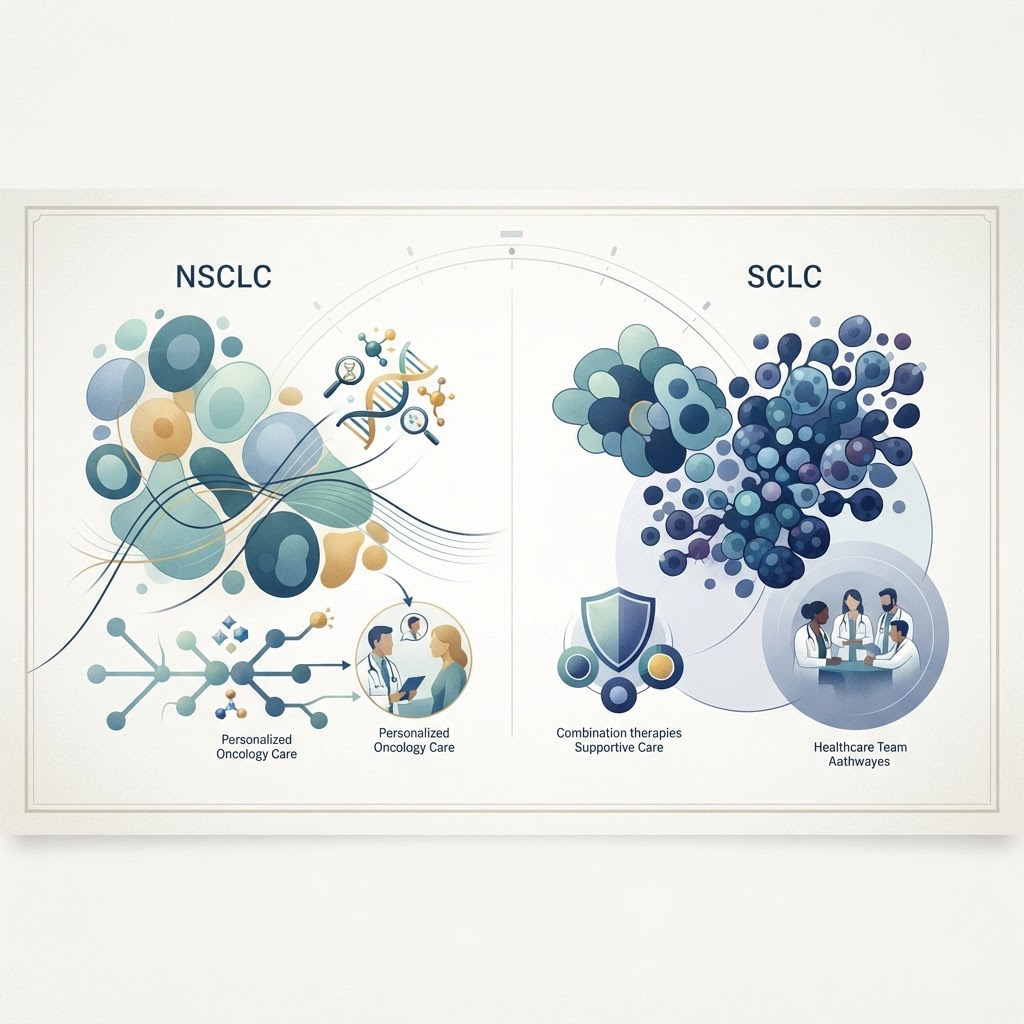
Lung cancer is primarily divided into two main types: non-small cell lung cancer (NSCLC) and small cell lung cancer (SCLC). NSCLC is more common and encompasses several subtypes, often influenced by specific genetic mutations or biomarkers. SCLC, while less frequent, is known for its aggressive growth pattern and tendency to spread early.
The distinction between NSCLC and SCLC is fundamental because it dictates treatment strategies and eligibility for specific clinical trials. Trials are often tailored to these subtypes, meaning a participant's specific cancer type is a key factor in determining which research studies may be appropriate.
The Role of Biomarkers
For NSCLC, identifying specific biomarkers through molecular testing is increasingly important. These biomarkers, such as EGFR, KRAS, or ALK alterations, can inform treatment choices and guide eligibility for targeted therapy clinical trials. Not all lung cancers have identifiable targets, but testing is a standard step.
Biomarker-driven trials aim to match a specific genetic change in the cancer cells with a therapy designed to target that change. This approach allows for more personalized treatment strategies, potentially leading to better responses in selected patient groups within clinical research.
Clinical Trial Phases Explained
Clinical trials are categorized into phases, each with a distinct purpose. Phase I trials are typically the first in humans, focusing on assessing safety, determining appropriate dosages, and identifying potential side effects of a new intervention. These studies involve a smaller number of participants.
Phase II trials build on Phase I findings, evaluating the effectiveness of the intervention in a specific group of patients, often those with a particular cancer type or subtype. Phase III trials are larger studies that compare the experimental treatment to the current standard of care to confirm its efficacy and safety.
Study Design and Randomization
Many clinical trials, particularly Phase III studies, employ randomization. This means participants are assigned by chance to receive either the experimental treatment or the standard treatment. Randomization helps ensure that the study results are unbiased and can be attributed to the treatment itself.
While randomization is common, not all comparative trials aim to prove superiority. Some studies are designed to show non-inferiority, meaning the new treatment is at least as good as the standard, or to explore different combinations of existing therapies. The specific research question guides the design.
Prognosis and Survival Considerations
A cancer diagnosis and its prognosis are influenced by many factors, including the type and stage of cancer, as well as an individual's overall health. Clinical trials investigate new treatments that may alter the course of the disease for participants.
Participation in a trial does not guarantee a cure or a specific outcome. Survival and prognosis are complex and depend on the disease's characteristics and the individual's response to treatment, whether standard or experimental. It is important to discuss potential benefits and uncertainties.
Risk and Prevention Research
Clinical trials also focus on prevention and early detection strategies for lung cancer. These studies might investigate factors that increase risk, such as environmental exposures or genetic predispositions, and explore ways to mitigate them.
Prevention trials can involve healthy volunteers or individuals at high risk for developing lung cancer. They aim to identify interventions that could reduce the incidence of the disease or detect it at its earliest, most treatable stages. These studies are vital for long-term public health.
Informed Consent and Patient Rights
Informed consent is a crucial, ongoing process where potential participants receive detailed information about a clinical trial's purpose, procedures, potential risks, and benefits. This ensures individuals can make a voluntary and informed decision about whether to participate.
Participants have the right to ask questions at any time and can withdraw from a trial at any point without affecting their future medical care. Understanding the specific terms of the informed consent document is essential for each individual considering enrollment.
Practical Aspects of Trial Participation
Participating in a clinical trial involves practical considerations, including the frequency of visits, travel requirements, and potential costs. Many trials offer support services to help alleviate these burdens for participants, such as travel assistance or lodging.
It is important to discuss all logistical aspects with the study team before enrolling. Understanding the time commitment, the location of study sites, and any available support resources will help ensure that participation is feasible and manageable alongside personal responsibilities.
Example: Targeted Therapy Trial for NSCLC
Consider a patient diagnosed with non-small cell lung cancer whose tumors have a specific KRAS G12C mutation. Comprehensive molecular testing identified this driver. This finding could make the patient eligible for a clinical trial investigating a novel drug designed to inhibit this particular mutation.
Instead of immediately starting a general chemotherapy regimen, the patient and their doctor explore trials matching the KRAS G12C biomarker. Enrollment in such a study provides access to a targeted therapy aimed at the specific molecular abnormality driving the cancer's growth.
Staging and Diagnostic Investigations
Diagnosis and staging investigations for lung cancer may proceed concurrently. A biopsy confirms the presence of cancer, while other tests assess its extent. Pathologic staging provides detailed information from tissue analysis, but imaging studies are also critical for defining the disease's scope.
Accurate staging is vital for determining treatment options and eligibility for clinical trials. It's important to note that N3 lymph node involvement in the chest is considered regional, not distant metastasis. Understanding how staging is determined is key to trial selection.
Questions to bring to your care team
- Does the trial align with my specific lung cancer type and stage?
- Have I undergone comprehensive molecular testing for relevant biomarkers?
- What is the specific phase of the trial and its primary research objective?
- What are the potential risks, benefits, and management plans for side effects?
- How will participation impact my daily life, including travel and time commitments?
Related guides
- A Lung Nodule on CT: Why Follow-Up Plans Differ
- Molecular Testing in Lung Cancer: Tissue, Blood Tests, and Treatment Choices
- Lung Cancer Screening: Low-Dose CT and Who May Benefit