Cancer articles & patient guides
Understand cancer types, screening, and treatment, then bring informed questions to your care team. Every guide includes sources and a clear medical review status.
117 guides available

Cancer Screening: Choosing Tests and Completing Follow-Up
Screening is a vital tool for detecting cancer early, but it requires active follow-up, realistic expectations of test limitations, and careful navigation of clinical guidelines.

Cancer Surgery: Planning, Recovery, and Follow-Up
Surgery effectively removes solid, localized tumors. Recovery is individualized, and patients should maintain clear communication with their surgical team regarding expectations, risks, and follow-up care.

Cancer Treatment Options: A Guide to the Main Approaches
This guide provides an overview of cancer treatment modalities, explaining local and systemic therapies, the role of biomarkers, and the importance of integrated, patient-centered care.

Living With Leukemia
Living with leukemia requires managing medical information, monitoring symptoms, and coordinating care to ensure your personal health goals remain the priority throughout your medical journey.

Leukemia Clinical Trials
Leukemia trials offer research-based treatments, but eligibility depends on specific disease genetics. Discuss potential risks, study design, and the consent process with your oncologist.

Leukemia Risk Factors and Prevention: Evidence and Limits
Leukemia risk is real but often unexplained; prevention can reduce selected hazards, not guarantee avoidance, while subtype-specific evaluation guides safer decisions.

Leukemia Prognosis and Survival Rates: Reading Statistics in Context
Leukemia statistics reflect large population trends, not individual futures. Focus on your specific molecular markers and clinical indicators rather than generalized survival estimates to guide discussions.

Leukemia Classification: How the Main Types Are Assessed
Leukemia classification hinges on cell type, growth rate, and genetic markers, guiding tailored treatment strategies rather than generic numerical staging.

Leukemia Treatment Options
Leukemia treatment is highly individualized, requiring precise genetic classification and a clear assessment of whether the disease is acute or chronic for optimal management.

Leukemia Symptoms
Leukemia symptoms vary by type and progression speed. From fatigue and bleeding to persistent infections, early medical evaluation is necessary for accurate diagnosis and management.

Skin Cancer Clinical Trials
Clinical trials offer a structured path to evaluate new skin cancer therapies. They provide patients with research options, though participation involves inherent uncertainties and trade-offs.

Skin Cancer Risk Factors and Prevention: Evidence and Limits
Skin cancer risk depends on cancer type, ultraviolet exposure, biology, and history; prevention can reduce risk, but neither protection nor treatment guarantees a particular outcome.

Skin Cancer Prognosis and Survival Rates: Reading Statistics in Context
Prognosis is an individualized estimate; survival statistics describe groups. Interpret subtype, extent, timing, and treatment context with clinicians rather than predicting individual outcomes.

Skin Cancer Stages
Staging categorizes the extent of skin cancer to guide treatment, though distinct frameworks exist for melanoma, basal cell, and squamous cell carcinomas based on biology.

Skin Cancer Treatment Options
Skin cancer management relies on distinguishing between melanoma and non-melanoma types, using tailored surgical, systemic, or localized therapies based on specific diagnostic and biomarker profiles.

Pancreatic Cancer Clinical Trials
This guide provides an overview of clinical trials for pancreatic cancer, emphasizing the distinction between disease types, the structure of research phases, and informed consent.

Pancreatic Cancer Risk Factors and Prevention: Evidence and Limits
Risk assessment is a clinical tool for identifying susceptibility, not a prediction of fate; individual management relies on informed, evidence-based conversations with healthcare providers.

Pancreatic Cancer Prognosis and Survival Rates: Reading Statistics in Context
Population statistics represent past, aggregate trends; they do not dictate individual outcomes. Always prioritize clinical staging and tumor biology when discussing your personal care path.

Pancreatic Cancer Stages
Pancreatic cancer staging uses systems like TNM to classify tumor size and spread, guiding treatment. Resectability, or the possibility of surgical removal, is a critical factor distinct from numerical stage.

Pancreatic Cancer Treatment Options
This guide outlines treatment options for pancreatic cancer, emphasizing the necessity of multidisciplinary coordination, clear diagnostic classification, and informed discussions regarding individual therapeutic goals and risks.

Colorectal Cancer Clinical Trials
Colorectal cancer clinical trials explore new treatments, prevention, and detection methods, offering access to innovations while advancing research. Understanding phases, biomarkers, consent, and logistics is key.

Colorectal Cancer Risk Factors and Prevention: Evidence and Limits
Understand colorectal cancer risks, from unmodifiable factors like age to modifiable lifestyle choices, and the critical role of screening and surveillance in prevention.

Colorectal Cancer Prognosis and Survival Rates: Reading Statistics in Context
Colorectal cancer prognosis and survival statistics offer a population-level outlook, not individual predictions. Understanding staging, tumor features, and treatment responses provides essential context for interpreting these complex data.

Colorectal Cancer Stages
Colorectal cancer staging guides treatment. The TNM system assesses tumor size/invasion (T), lymph node involvement (N), and distant spread (M). Stages range from 0 (carcinoma in situ) to IV (metastatic). Location impacts treatment, with rectal cancers often managed differently than colon cancers.

Colorectal Cancer Treatment Options
Treatment depends on tumor location, stage, biomarkers, health, and goals; discuss sequencing, benefits, risks, supportive care, trials, and uncertainty with your care team before deciding.

Colorectal Cancer Diagnosis
Colorectal cancer diagnosis requires precise clinical staging and pathology analysis to guide individual treatment sequences, distinguishing clearly between colon and rectal cancer care protocols.

Prostate Cancer Clinical Trials
Clinical trials offer research-based options for prostate cancer management, though participation requires careful review of protocols, individual risks, and long-term diagnostic implications with your oncologist.

Prostate Cancer Risk Factors and Prevention: Evidence and Limits
Prostate cancer risk factors and prevention strategies require careful consideration. Age, race, and family history are key unmodifiable risks. While lifestyle choices can support general health, no specific diet or supplement is proven to prevent the disease. Screening methods like PSA testing are not diagnostic and carry risks of overdiagnosis, necessitating individualized decisions.

Prostate Cancer Prognosis and Survival Rates: Reading Statistics in Context
Prostate cancer survival rates are group-based averages, not personal predictions. Optimal care requires focusing on individual tumor biology, personal health factors, and informed clinical decision-making.

Prostate Cancer Stages
Understanding prostate cancer staging is key to treatment. This guide explains stages I-IV, grading, and risk factors, aiding informed decisions.

Prostate Cancer Diagnosis
Prostate cancer diagnosis combines screening, imaging, and biopsy. Understanding your test results, like PSA and Gleason scores, is key to individualized care.

Prostate Cancer Symptoms
Prostate cancer symptoms can range from none to urinary changes or bone pain. Recognizing these signs and consulting a doctor is vital, as similar symptoms can arise from non-cancerous conditions.

Living With Breast Cancer
Living with breast cancer extends beyond active treatment, encompassing ongoing care, symptom management, and emotional support. Understanding your diagnosis, building a strong care team, and knowing your treatment options are key. This guide offers practical advice for navigating daily life, survivorship, and maintaining quality of life.

Breast Cancer Clinical Trials
Clinical trials are research studies that evaluate new breast cancer treatments, offering patients access to innovative therapies and contributing to medical advancement.

Breast Cancer Risk Factors and Prevention: Evidence and Limits
Understanding breast cancer risk involves distinguishing between modifiable and nonmodifiable factors. While screening detects disease early, it does not prevent its occurrence. Personal vigilance and informed discussions with healthcare providers are essential for risk assessment and management.

Breast Cancer Prognosis and Survival Rates: Reading Statistics in Context
Prognosis combines population statistics with individual clinical factors; survival measures describe groups, not destinies, and must be interpreted alongside stage, biomarkers, treatment, health, and uncertainty.

Breast Cancer Treatment Options
Treatment for breast cancer is highly individual, utilizing specific combinations of local surgery, radiation, and systemic therapies based on the tumor biology and stage.

Breast Cancer Symptoms
New breast changes need assessment even when they are tender or follow a cycle. Understand possible symptoms, diagnostic follow-up, and urgent warning signs.

Living With Lung Cancer
Living with lung cancer requires a multidisciplinary team approach. Focus on symptom management, informed decisions about treatments, and maintaining quality of life through every stage.

Lung Cancer Clinical Trials
Lung cancer clinical trials represent an important avenue for patients seeking innovative treatments. Understanding trial phases, biomarker relevance, and practical considerations is key to informed decision-making.

Lung Cancer Risk Factors and Prevention: Evidence and Limits
Lung cancer risk factors include smoking, environmental exposures, and genetics. Prevention involves avoiding carcinogens and considering screening for high-risk individuals. Treatment decisions require understanding subtype, stage, and informed consent.
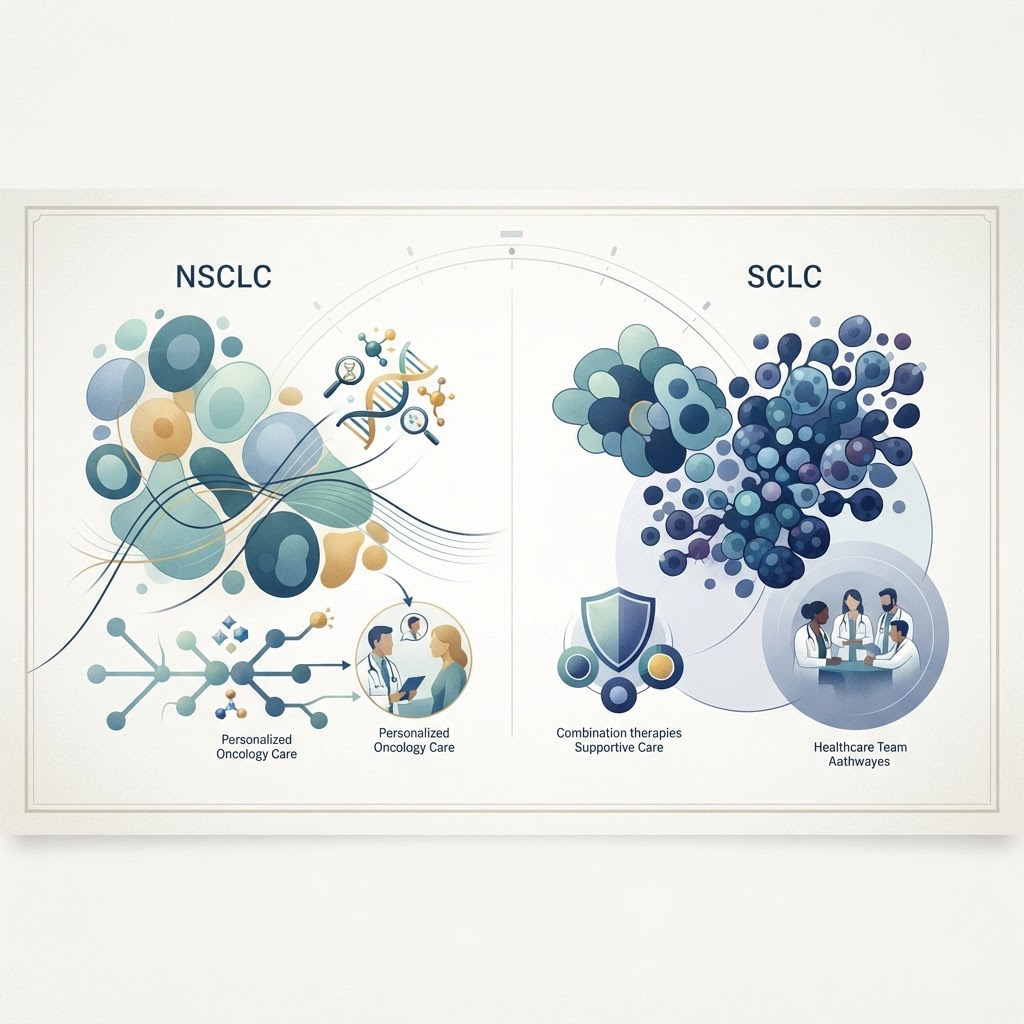
Lung Cancer Prognosis and Survival Rates: Reading Statistics in Context
Prognosis and survival data are population-level tools. Because individual health and tumor genetics vary, these statistics provide helpful frameworks rather than specific personal life expectancy.

Lung Cancer Stages
This guide details how staging systems, including TNM, evaluate lung cancer spread, assisting patients and providers in developing informed, stage-appropriate treatment plans and clinical expectations.

Lung Cancer Treatment Options
Lung cancer treatment is an individualized process using local and systemic therapies. Success depends on accurate staging, molecular testing, and clear communication regarding treatment goals.

Lung Cancer Symptoms
Lung cancer symptoms can resemble other conditions. Learn what to report, how symptom assessment differs from screening, and which sudden changes need emergency help.

Living With Mesothelioma
Mesothelioma management requires a personalized, multidisciplinary approach. By focusing on symptom relief, clear communication with your care team, and support, you can improve daily living.

Mesothelioma Clinical Trials
Clinical trials evaluate new mesothelioma treatments within strict safety guidelines. Patients must weigh the potential for investigative therapies against known standard care options carefully.

Mesothelioma Prognosis and Survival Rates: Reading Statistics in Context
Mesothelioma statistics describe groups, not individuals. Personal prognosis depends on your unique tumor location, cell type, and health status, requiring direct dialogue with your oncologists.

Living With a Colostomy or Ileostomy: A Practical Daily-Care Guide
Learn how an ostomy nurse can help with pouch fit, skin care, supplies, hydration, and returning to daily activities after bowel surgery.

A Positive FIT or Stool Screening Test: What Happens Next
A positive stool screening test needs follow-up, but it is not a cancer diagnosis. Learn how to arrange the next step and prepare for colonoscopy.

Urinary and Sexual Changes After Prostate Cancer Treatment
A practical guide to discussing urinary leakage, erection changes, intimacy, and rehabilitation before and after prostate cancer treatment.

Gleason Score and Grade Group: Understanding Prostate Cancer Reports
Learn what Gleason patterns and Grade Groups mean, why 3+4 differs from 4+3, and which other findings matter when discussing prostate cancer care.

Molecular Testing in Lung Cancer: Tissue, Blood Tests, and Treatment Choices
Understand the role of molecular testing in lung cancer care and ask about tissue samples, blood tests, pending results, and treatment decisions.

A Lung Nodule on CT: Why Follow-Up Plans Differ
Understand why most lung nodules are not cancer, what shapes a follow-up plan, and how to keep the next scan or appointment from being missed.

Breast Cancer Endocrine Therapy: Long-Term Treatment Questions
Understand the purpose of endocrine therapy for hormone receptor-positive breast cancer and organize questions about duration, symptoms, and medicines.

Lymphedema After Breast Cancer Treatment: Signs and Care-Team Support
Notice swelling, heaviness, and changes in movement after breast cancer treatment, and prepare a plan for assessment and specialist support.

Lumpectomy and Mastectomy: Comparing the Full Treatment Plan
Compare lumpectomy and mastectomy within the complete treatment plan, including radiation, recovery, reconstruction, and personal priorities.

ER, PR, HER2, and Triple-Negative Breast Cancer: Reading the Labels
Read ER, PR, and HER2 findings in context, understand triple-negative terminology, and prepare questions about pending or additional tests.

Genetic Counseling for Cancer Risk: Preparing a Useful Family History
Prepare an accurate family history, clarify the purpose of inherited-risk testing, and discuss what different results could change.

Alcohol and Cancer Risk: Understanding the Evidence and Your Choices
Understand the link between alcohol and cancer, discuss treatment-specific concerns, and make a practical plan if you want to reduce drinking.

Physical Activity and Cancer: Adapting Movement to Your Situation
Discuss movement that fits your health and treatment, turn general activity goals into manageable routines, and know when to ask for rehabilitation help.

Quitting Tobacco After a Cancer Diagnosis: Finding Useful Support
Find practical tobacco-cessation support during cancer care, including counseling, medication questions, triggers, and a plan for setbacks.

Hepatitis B, Hepatitis C, and Liver Cancer Risk
Understand the differences between hepatitis B and C, why testing matters, and what to ask about vaccination, treatment, and liver follow-up.

HPV Vaccination and Cancer Prevention: Common Questions
Review CDC's HPV vaccination age guidance, understand what the vaccine prevents, and prepare questions about doses and ongoing screening.

Stem Cell Transplant: Donor Matching, Recovery, and Long-Term Follow-Up
Understand the broad transplant types and prepare questions about donor matching, time near the center, caregivers, and long-term follow-up.

CML Monitoring: Understanding BCR::ABL1 Test Trends
Understand why CML care follows BCR::ABL1 test results over time and what to ask about the report, treatment routine, and next check.

CLL and Active Surveillance: Why Monitoring Can Be a Treatment Plan
Learn why some people with CLL are monitored before treatment and how to make the observation plan specific, supported, and easy to follow.

Acute Lymphoblastic Leukemia: Treatment Phases and Everyday Planning
Understand the broad phases of ALL care and organize changing schedules, monitoring, supportive care, and questions for each transition.

Newly Diagnosed AML: Organizing the First Week of Care
Organize the first days after an AML diagnosis, including pending tests, urgent contacts, treatment discussions, and practical support.

Pancreatic Cancer in the Family: Genetic Counseling and Surveillance Questions
Prepare a family history for genetic counseling and learn why pancreatic surveillance is a specialist discussion rather than a routine test for everyone.

Resectable, Borderline Resectable, and Advanced Pancreatic Cancer
Understand the treatment-planning terms used for pancreatic cancer and ask what findings, goals, and reassessment points shape the next step.

Whipple Surgery: Planning for Hospital Care and Recovery at Home
Prepare practical questions for Whipple surgery, from the operation and hospital stay to meals, home help, and follow-up after discharge.

Pancreatic Cancer, Digestive Enzymes, and Nutrition Support
Learn why digestive symptoms need assessment during pancreatic cancer care and how to ask about enzyme treatment, meals, and dietitian support.

Pancreatic Cancer Tests: CT, MRI, Endoscopic Ultrasound, and Biopsy
Understand why pancreatic cancer assessment may involve several tests and how to prepare questions about imaging, biopsy, and pending results.

Melanoma Follow-Up: Organizing Skin Checks, Symptoms, and Visits
Build a melanoma follow-up routine that connects skin checks, planned visits, symptom reporting, and the records different clinicians need.

Melanoma and Sentinel Lymph Node Biopsy: Questions Before Surgery
Understand what a sentinel lymph node biopsy can tell you and prepare questions about its purpose, risks, timing, and possible results.

Mohs Surgery: Why Tissue Is Checked in Stages
Understand the tissue-checking stages of Mohs surgery and prepare questions about the day, wound repair, aftercare, and follow-up.

Sun Protection: Shade, Clothing, Sunscreen, and the UV Index
Combine shade, clothing, and sunscreen in a practical outdoor plan, and use the UV Index without treating it as a measure of temperature.

Skin Biopsy: Preparing for the Appointment and Understanding the Result
Prepare for a skin biopsy, clarify wound-care and result instructions, and understand why the sample matters more than appearance alone.

A Changing Mole: Using ABCDE Clues Without Diagnosing Yourself
Use ABCDE clues to describe a changing spot, understand their limits, and prepare useful information for a dermatologist.

A Cancer Survivorship Care Plan: What to Keep and Who to Call
Organize your treatment summary, follow-up responsibilities, ongoing symptoms, and routine healthcare in a care plan you can actually use.

Neutropenia and Fever: Making an Infection Response Plan
Prepare a written plan for fever and infection during treatment, with an urgent contact number, temperature instructions, and care-team guidance.

Peripheral Neuropathy During Cancer Treatment: Symptoms and Home Safety
Recognize nerve-related changes during treatment, describe their effect on daily activities, and discuss home safety and symptom management.

Cancer-Related Fatigue: Building a Day Around Your Energy
Track how fatigue affects daily tasks, identify questions for your care team, and build a realistic routine around the energy you have.

Palliative Care and Hospice: Different Roles in Cancer Support
Learn how palliative care and hospice differ, how support can fit alongside treatment, and what to ask about referrals, services, and coverage.

Taking Targeted Cancer Therapy at Home: A Practical Safety Plan
Build a written plan for oral targeted therapy, including pharmacy contacts, interactions, missed doses, storage, and side-effect reporting.

Biomarker Testing: What a Tumor Test Can and Cannot Tell You
Understand tumor biomarker testing, why a result may not identify a treatment, and the questions to ask before a sample is sent.

Understanding Your Cancer Pathology Report
Learn where to find the diagnosis, grade, margins, and pending tests in a pathology report, then prepare a focused conversation with your clinician.

Leukemia: Types, Diagnosis, and Questions for Your Care Team
Understand acute and chronic leukemia, why subtype matters, and how to organize the first specialist conversation.

Getting a Second Opinion After a Cancer Diagnosis
Plan another specialist review, transfer the right records, and compare recommendations clearly.

Considering a Cancer Clinical Trial: A Patient Decision Guide
Understand eligibility, consent, practical arrangements, and which questions must be answered before enrollment.

How to Prepare for a Cancer Treatment Appointment
Use a records checklist and a written decision summary to make an oncology appointment easier to follow.

Mesothelioma Staging: Extent of Disease and Treatment Planning
Learn what staging describes, why location matters, and why a stage does not predict an individual outcome.

Mesothelioma Diagnosis: Imaging, Biopsy, and Specialist Review
Understand what scans and tissue tests can establish and which records to request during the diagnostic process.

Radiation Therapy for Cancer: Planning, Visits, and Side Effects
Understand the difference between external and internal radiation, and prepare questions about your own treatment plan.

Melanoma, Basal Cell, and Squamous Cell Cancer: Key Differences
Understand why a skin lesion needs a diagnosis and how the main cancer types differ.

Pancreatic Cancer Symptoms: Evaluation and Screening Limits
Recognize concerning changes and understand why average-risk screening differs from a symptom workup.

Colorectal Cancer Symptoms: When to Request an Assessment
Understand why persistent bowel changes and bleeding need evaluation even when screening is not due.

Colonoscopy for Colorectal Screening: Preparation and Follow-Up
Learn how colonoscopy fits among screening options and what to confirm before and after the procedure.

Prostate Cancer Treatment: Comparing Surveillance and Active Treatment
Understand why risk, disease extent, overall health, and personal priorities shape the care plan.

PSA Testing: Screening Decisions and Understanding an Elevated Result
Learn what PSA can and cannot tell you, and why screening requires a discussion of benefits and harms.

Breast Cancer Screening: Mammograms, Age, and Follow-Up
Understand the current USPSTF recommendation, its limits, and what an abnormal screening result means.

Breast Cancer Staging: Tumor, Lymph Nodes, and Biomarkers
Learn why breast cancer staging includes more than tumor size and how to read the main findings in your report.

Small Cell and Non-Small Cell Lung Cancer: Why the Difference Matters
Learn how the pathology diagnosis shapes staging, testing, and treatment discussions.

Lung Cancer Screening: Low-Dose CT and Who May Benefit
Review the USPSTF eligibility criteria and the difference between screening and evaluating symptoms.

Mesothelioma Financial and Legal Resources: Preparing Your Questions
Organize records, find qualified help, and ask about benefits and legal options without relying on promises of compensation.

Asbestos Exposure and Cancer Risk: Health and Record-Keeping Steps
Understand the difference between exposure and disease, and prepare a useful history for a healthcare professional.

Cancer Prevention: Practical Ways to Reduce Risk
Focus on tobacco, ultraviolet exposure, alcohol, infection prevention, and a personalized screening discussion.

Cancer Staging: What the Numbers and Letters Describe
Understand stage, grade, clinical findings, and the limits of comparing different cancer diagnoses.

Cancer Immunotherapy: Types, Monitoring, and Questions to Ask
Understand why immunotherapy is not one treatment and why new symptoms need attention during and after care.

Colorectal Cancer Screening: Choosing a Test and Completing Follow-Up
Compare stool-based tests and colon examinations, with attention to the full screening process.

Chemotherapy: Treatment Cycles, Monitoring, and Everyday Planning
Learn why chemotherapy schedules differ, how response is assessed, and which practical instructions to request.

Breast Cancer: Diagnosis Terms and Care-Team Questions
Understand the difference between diagnosis, stage, biomarkers, and the treatment plan after a breast cancer finding.

Lung Cancer: Diagnosis, Testing, and Treatment Conversations
A practical introduction to the information needed after a lung cancer finding.

Mesothelioma Treatment Options: Questions for an Experienced Team
Explore the role of surgery, systemic treatment, radiation, trials, and symptom support without assuming one plan fits everyone.

Mesothelioma Symptoms: Changes to Discuss With a Clinician
Learn how symptoms can differ by location and how to prepare a clear symptom history without self-diagnosing.

What Is Mesothelioma? Types, Causes, and Next Steps
Understand where mesothelioma starts, how it differs from lung cancer, and what to ask after a diagnosis.